Research Fest 2026 is the inaugural research forum of the College of Computing and Data Science (CCDS), Nanyang Technological University, Singapore. Held over two days, the event convenes leading researchers from around the world together with CCDS faculty, researchers, and students to engage with contemporary questions and emerging directions in computing, data science, and artificial intelligence.

Conceived as a platform for scholarly exchange, Research Fest provides an opportunity for researchers across disciplines and career stages to connect, share perspectives, and explore potential avenues for collaboration.

Details

Start: 26 February 2026
End: 27 February 2026
NTU Event

Nanyang View, Nanyang Executive Centre, Singapore

Nanyang View 60
639673 Singapore
Singapore

Speakers

Professor Alessandro Abate

University of Oxford
Professor Alessandro Abate
  • Professor Alessandro Abate

    Talk Title
    Neural Proofs for Sound Verification of Complex Systems

    Abstract
    I discuss the construction of sound proofs for the formal verification and control of complex stochastic models of dynamical systems and reactive programs.

    Neural proofs are made up of two parts. Proof rules encode requirements for the verification of general temporal specifications over the models of interest. Certificates are then constructed from said proof rules with an inductive approach, namely accessing samples from the dynamics and training neural nets, whilst generalising such networks via SAT-modulo-theory queries, based on the full knowledge of the models.

    In the context of sequential decision making problems over stochastic models, I discuss how to additionally generate policies/strategies/controllers, in order to formally attain given specifications.

    Biography
    Alessandro Abate is Professor of Verification and Control in the Department of Computer Science at the University of Oxford. Earlier, he did research at Stanford University and at SRI International, and was an Assistant Professor at the Delft Center for Systems and Control, TU Delft. He received a Laurea degree from the University of Padua and MS/PhD at UC Berkeley. His research work spans logics, probability, control and AI.

    Read more

Professor Cristian Cadar

Imperial College London
Professor Cristian Cadar
  • Professor Cristian Cadar

    Talk Title
    Testing and Analysis of Modern Software: Challenges and Opportunities

    Abstract
    Software development is undergoing significant transformations, with systems growing at an accelerated rate and increasingly incorporating AI-generated code.  As a result, successful software testing and analysis techniques such as fuzzing and symbolic execution have to similarly adapt to remain useful.  In this talk, I will discuss our recent research efforts in this direction, including testing and analysis approaches that leverage advances in AI while preserving many of the strengths of traditional methods.

    Biography
    Cristian Cadar is a Professor in the Department of Computing at Imperial College London, where he leads the Software Reliability Group (http://srg.doc.ic.ac.uk), working on automatic techniques for increasing the reliability and security of software systems.  Prof. 
    Cadar's research has been recognised by several prestigious awards, including the EuroSys Jochen Liedtke Award, HVC Award, BCS Roger Needham Award, IEEE TCSE New Directions Award, Humboldt Research Award, and two test of time awards.  Many of the research techniques he co-authored have been open-sourced and used in both academia and industry.  In particular, he is co-author and maintainer of the KLEE symbolic execution system, a popular system with a large user base.  Prof. Cadar has a PhD in Computer Science from Stanford University, and undergraduate and Master's degrees from the Massachusetts Institute of Technology

    Read more

Professor Cyrus Shahabi

University of Southern California
Professor Cyrus Shahabi
  • Professor Cyrus Shahabi

    Talk Title
    Transforming Mobility: From Next-Visit Prediction to a Mobility Foundation Model

    Abstract
    Understanding where people move, when they move, and why they move is critical for applications ranging from transportation and urban planning to public health, safety, and disaster response. With the rapid growth of large-scale mobility data, a key challenge is how to build general-purpose models that can support many such applications, rather than being designed task by task.

    In this talk, I will first introduce TrajGPT, our recent work on learning a transformer-based model of human mobility that can be trained at scale on unlabeled trajectory data and reused across multiple downstream tasks, such as completing missing mobility data, attributing visits to places, and detecting anomalous movement patterns—pointing toward the emergence of mobility foundation models.

    More broadly, successful foundation models share three core properties: transferable representations of their basic units, self-supervised learning on massive unlabeled data, and a universal backbone adaptable to many tasks. TrajGPT demonstrates the latter two for mobility data. The remaining open challenge is identifying the right foundational units.

    I will conclude by discussing geospatial objects (GEOs) as a promising direction for building richer, transferable representations that integrate mobility, environment, and spatial context—paving the way toward true mobility foundation models for urban computing, public health, and beyond.

    Biography
    Cyrus Shahabi is a Professor of Computer Science, Electrical & Computer Engineering and Spatial Sciences; Helen N. and Emmett H. Jones Professor of Engineering; and the director of the Integrated Media Systems Center (IMSC) at USC’s Viterbi School of Engineering.  He also served as USC's Thomas Lord Department of Computer Science from 2017 to 2022. He was co-founder of two startups, Geosemble Technologies and TallyGo, which both were acquired in July 2012 and March 2019, respectively. He received his B.S. in Computer Engineering from Sharif University of Technology in 1989 and then his M.S. and Ph.D. Degrees in Computer Science from the University of Southern California. He authored two books and more than three hundred research papers in databases, GIS, and multimedia, and he has over 14 US patents.

    Dr. Shahabi has received funding from several agencies such as NSF, NIJ, NASA, NIH, DARPA, AFRL, IARPA, NGA, and DHS, as well as several industries such as Chevron, Cisco, Google, HP, Intel, Microsoft, NCR, NGC, and Oracle. He chaired the founding nomination committee of ACM SIGSPATIAL (2008-2011 term) and served as the chair of ACM SIGSPATIAL for the 2017-2020 term. He was an Associate Editor of IEEE Transactions on Parallel and Distributed Systems (TPDS) from 2004 to 2009, IEEE Transactions on Knowledge and Data Engineering (TKDE) from 2010 to 2013, VLDB Journal from 2009 to 2015 and PVLDB (Vol. 16) in 2023. He is on the ACM Transactions on Spatial Algorithms and Systems (TSAS) editorial board and ACM Computers in Entertainment. He was the founding chair of the IEEE NetDB workshop and the general co-chair of SSTD’15, ACM GIS 2007, 2008, and 2009. He has been PC co-chair of several conferences, such as APWeb+WAIM’2017, BigComp’2016, MDM’2016, DASFAA 2015, IEEE MDM 2013, IEEE BigData 2013 and VLDB 2024. He regularly serves on the program committee of major conferences such as VLDB, SIGMOD, IEEE ICDE, ACM SIGKDD, and IEEE ICDM.

    Dr. Shahabi is a fellow of IEEE and NAI (National Academy of Inventors).  He received the ACM Distinguished Scientist Award 2009, the 2003 U.S. Presidential Early Career Awards for Scientists and Engineers (PECASE), the NSF CAREER award in 2002, and the 2001 Okawa Foundation Research Award. He received the ACM SIGSPATIAL 2023 10-Year Impact Award in 2023. He was also a recipient of the US Vietnam Education Foundation (VEF) faculty fellowship award in 2011 and 2012, an organizer of the 2011 National Academy of Engineering “Japan-America Frontiers of Engineering” program, an invited speaker in the 2010 National Research Council (of the National Academies) Committee on New Research Directions for the National Geospatial-Intelligence Agency, and a participant in the 2005 National Academy of Engineering “Frontiers of Engineering” program.

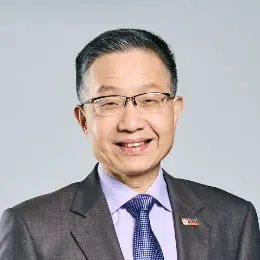
    Read more

Professor Danupon Nanongkai

Max Planck Institute for Informatics
Professor Danupon Nanongkai
  • Professor Danupon Nanongkai

    Talk Title
    Algorithms and Time Complexity: Recent Advances

    Abstract
    This talk will discuss recent theoretical advances in the design of efficient algorithms. We will cover a range of results, including fast graph and string algorithms. The material is self-contained and structured to require only minimal prior knowledge of theoretical computer science.

    Biography
    Danupon Nanongkai is a Scientific Director at the Max Planck Institute for Informatics in Saarbruecken, Germany. His research focuses on graph algorithms and complexity theory, with a current emphasis on developing algorithmic techniques that are effective across a range of computational models. Honors he received include the  Principles of Distributed Computing Doctoral Dissertation Award (2013), an ERC Starting Grant (2016), and the Best Paper Award at FOCS (2022). 

    Read more

Professor Edith Elkind

Northwestern University
Professor Edith Elkind
  • Professor Edith Elkind

    Talk Title
    Many Facets of Proportionality in Multiwinner Voting

    Abstract
    In a multiwinner election, voters express their preferences over candidates, and the goal is to select a fixed-size set of winners; these can be members of parliament, food items to be ordered for a reception, or statements about a controversial topic. This talk will summarize recent progress on defining what it means for an outcome of multiwinner election to be proportional, and how to extend this notion of proportionality to richer environments.

    Biography
    Edith Elkind is a Ginny Rometty Professor of Computer Science at Northwestern University. She obtained her PhD from Princeton in 2005, and worked in Israel, Singapore, and the UK before joining Northwestern in 2024. She works in algorithmic game theory, with a focus on algorithms for collective decision making. She is a recipient of the SIGAI Autonomous Agents Research Award and a Fellow of EurAI. She served as a chair of multiple leading conferences in AI and algorithmic game theory (including IJCAI, ACM EC, AAMAS, WINE and COMSOC), and serves as an editor in chief of Journal of AI Researc

    Read more

Associate Professor Alvin Cheung

University of California, Berkeley
Associate Professor Alvin Cheung
  • Associate Professor Alvin Cheung

    Talk Title
    An Agentic Approach to Optimize Agentic Workflows

    Abstract
    We are seeing an explosion in the use of autonomous agents in developing software. Such agents, often constructed using language models, now perform tasks from issuing queries to explore data stored in databases, to compiling and optimizing code. In this talk, I will first share some observations in studying workflows generated by agents for the natural language to SQL task, and then describe our current efforts towards using agents to tackle data-intensive programming tasks.

    Biography
    Alvin Cheung is an associate professor in the EECS department at UC Berkeley, where his group works on data management and programming language research. Work from his group has received a number of best paper / poster / demo awards in different venues. Alvin is a PECASE awardee (highest honor bestowed by the US government on early career scientists and engineers), a Sloan fellow, and a recipient of early career research awards from the data management research community, the programming languages research community, and various government agencies and companies.

    Read more

Assistant Professor Marios Kogias

Imperial College London
Assistant Professor Marios Kogias
  • Assistant Professor Marios Kogias

    Talk Title

    Past, Present and Future Challenges in Datacenter and Cloud Networking

    Abstract

    Datacenter and cloud networks are undergoing a fundamental transition. Up until recently, datacenter networking has been driven by increasing link speeds, shrinking switch buffers, tight latency requirements, and in-network programmability. While such bespoke solutions are still hard to deploy in a multi-tenant cloud environment, hence are not widely accessible to cloud tenants, emerging AI workloads and agentic applications are shaking the requirements for datacenter and cloud networking by changing the traffic patterns and introducing new communication protocols.

    In this talk, I will first present SIRD (NSDI’25), corresponding to the past challenges, a congestion control protocol designed for modern datacenter fabrics. SIRD revisits receiver-driven designs and shows how explicitly distinguishing between single-owner and shared links enables precise scheduling without sacrificing stability. By combining scheduling with reactive control, SIRD achieves high utilization and near-optimal latency while keeping queuing minimal, even at 100 Gbps.

    I then, turn to current challenges that revolve around making all this research on datacenter infrastructure available to the public cloud. I present KRAKENGUARD, a policy-driven access control framework that enables safe, multi-tenant use of eBPF specifically for networking hooks such as XDP. KRAKENGUARD enforces fine-grained constraints on eBPF programs at load time based on exhaustive symbolic execution, preventing privilege abuse and unsafe interference between co-located network functions.

    Finally, I will describe our ongoing effort (future challenges) towards describing a networking stack specifically targeting AI training workloads. I will explain how the specifics of the AI training communication patterns allow us to completely rethink the required mechanisms for routing, congestion control, and Quality of Service.

    Biography

    Marios Kogias is an Assistant Professor in the Department of Computing at Imperial College London, where he conducts research in operating systems, networking, and distributed systems, with a particular focus on tail-tolerant systems, datacenter networking, and cloud infrastructure. He received his PhD from EPFL, where his work was recognised with the 2021 Dennis M. Ritchie Doctoral Dissertation Award and an honourable mention for the Roger Needham PhD Award, and was supported by an IBM PhD Fellowship. His research has been published in top-tier systems conferences and has received a Best Student Paper Award at Eurosys and a Distinguished Artifact Award at ASPLOS. He is currently supported by an ERC Starting Grant, EPSRC funding, and industry collaborations

    Read more

Assistant Professor Jiajun WU

Stanford University
Assistant Professor Jiajun WU
  • Assistant Professor Jiajun WU

    Talk Title
    Understanding Visual Intelligence Through Physical Intrinsics

    Abstract
    Much of our visual world has an intrinsic, physical structure: scenes are composed of objects; objects possess their own geometry, texture, material, and physical properties. How can we infer, represent, and use such intrinsic structure from raw visual data, without hampering the expressiveness of neural networks? Alternatively, with the rapid development of visual AI models, what role does such structural information play, or do we still need it at all? In this talk, I will discuss our recent efforts on machine visual understanding, reconstruction, and generation, and their connections to such physical intrinsics. I will introduce and contrast two technical paths: leveraging intrinsics as powerful inductive biases vs. grounding pre-trained vision foundation models onto intrinsics. I will show that we can now build visual intelligence that infers object shape, texture, material, and physics, as well as scene context, all from a single image or video, with applications in controllable, action-conditioned 4D visual world understanding, generation, and interaction.

    Biography
    Jiajun Wu is an Assistant Professor of Computer Science and, by courtesy, of Psychology at Stanford University, working on computer vision, machine learning, robotics, and computational cognitive science. Before joining Stanford, he was a Visiting Faculty Researcher at Google Research. He received his PhD in Electrical Engineering and Computer Science from the Massachusetts Institute of Technology. Wu's research has been recognized through the Young Investigator Programs (YIP) by ONR and by AFOSR, the NSF CAREER award, the Okawa research grant, the AI's 10 to Watch by IEEE Intelligent Systems, paper awards and finalists at ICCV, CVPR, SIGGRAPH Asia, ICRA, CoRL, and IROS, dissertation awards from ACM, AAAI, and MIT, the 2020 Samsung AI Researcher of the Year, and faculty research awards from Google, J.P. Morgan, Samsung, Amazon, and Meta.

    Read more

programme

26 Feb 2026
27 Feb 2026
26 February 2026 at 8:30 am — 26 February 2026 at 8:50 am
Registration
26 February 2026 at 8:50 am — 26 February 2026 at 9:00 am
Opening Speech by Vice President (AI & Digital Economy) and Dean, College of Computing and Data Science
Professor Luke Ong picture
Professor Luke Ong
26 February 2026 at 9:00 am — 26 February 2026 at 9:50 am
Algorithms and Time Complexity: Recent Advances
Professor Danupon Nanongkai picture
Professor Danupon Nanongkai
26 February 2026 at 10:30 am — 26 February 2026 at 11:00 am
Coffee Break + Poster Session
26 February 2026 at 11:00 am — 26 February 2026 at 11:50 am
Transforming Mobility: From Next-Visit Prediction to a Mobility Foundation Model
Professor Cyrus Shahabi picture
Professor Cyrus Shahabi
26 February 2026 at 12:30 pm — 26 February 2026 at 2:00 pm
Lunch + Poster Session
26 February 2026 at 2:00 pm — 26 February 2026 at 2:50 pm
An Agentic Approach to Optimize Agentic Workflows
Associate Professor Alvin Cheung picture
Associate Professor Alvin Cheung
26 February 2026 at 3:30 pm — 26 February 2026 at 4:00 pm
Coffee Break
26 February 2026 at 4:00 pm — 26 February 2026 at 4:50 pm
Testing and Analysis of Modern Software: Challenges and Opportunities
Professor Cristian Cadar picture
Professor Cristian Cadar
27 February 2026 at 8:30 am — 27 February 2026 at 9:00 am
Registration
27 February 2026 at 9:00 am — 27 February 2026 at 9:50 am
Many Facets of Proportionality in Multiwinner Voting
Professor Edith Elkind picture
Professor Edith Elkind
27 February 2026 at 10:30 am — 27 February 2026 at 11:00 am
Coffee Break + Poster Session
27 February 2026 at 11:00 am — 27 February 2026 at 11:50 am
Past, Present and Future Challenges in Datacenter and Cloud Networking
Assistant Professor Marios Kogias picture
Assistant Professor Marios Kogias
27 February 2026 at 12:30 pm — 27 February 2026 at 2:00 pm
Lunch + Poster Session
27 February 2026 at 2:00 pm — 27 February 2026 at 2:50 pm
Neural Proofs for Sound Verification of Complex Systems
Professor Alessandro Abate picture
Professor Alessandro Abate
27 February 2026 at 3:30 pm — 27 February 2026 at 4:00 pm
Coffee Break
27 February 2026 at 4:00 pm — 27 February 2026 at 4:50 pm
Understanding Visual Intelligence Through Physical Intrinsics
Assistant Professor Jiajun WU picture
Assistant Professor Jiajun WU