
The International Workshop on Computing Education in the AI Age brings together educators, researchers, and industry practitioners to examine how AI is reshaping the teaching of programming and software engineering.
Through keynote addresses and panel discussions, speakers will explore the capabilities students need, the foundations that remain essential, and emerging approaches to computing education in the age of agentic AI.
- CodeHinter – Visual Studio code extension for debugging – Singapore University of Technology and Design (SUTD)
- AlgoGPT: An AI-Powered Personalised Learning and Pair Programming Platform for Data Structures and Algorithms – Nanyang Technological University (NTU)
- Agentic AI Learning Platform – National University of Singapore (NUS)
- KAGA-P: Knowledge-state Aware Generative Agents with Psychometric Alignment &
Debunkr: Debunk to Deepen: An AI-enhanced Pedagogical Approach for Transforming Misconceptions into Deeper Understanding – Singapore Management University (SMU) - TeamAId – an AI infused team-collaboration platform – Singapore Institute of Technology (SIT)
- Supporting Inquiry-Driven Experiential Learning: The NTU Learning With AI Showcase – InsPIRE NTU
- Computing educators from Singapore’s autonomous universities
- Faculty from polytechnics and other institutes of higher learning
- Computing-education researchers
- Practitioners involved in software development and workforce preparation
- International delegates, especially those also attending AIFE 2026 Singapore (16 – 18 November)
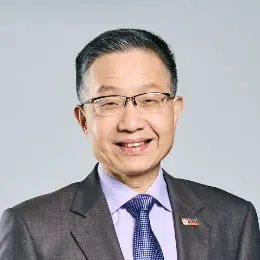
Professor Luke Ong
Dean, College of Computing and Data Science (CCDS)
Nanyang Technological University (NTU)
Session: Welcome Address
Biography
Professor Luke Ong is NTU's Vice President for AI and Digital Economy and the Dean for the College of Computing and Data Science. He joined NTU as a Distinguished University Professor in August 2022. Prior to joining NTU, he was Lecturer then Professor of Computer Science at the University of Oxford (1994-2022); Fellow of Merton College, Oxford (1994-2022); Honorary Professor of Computer Science, Bristol University (since 2022); Shaw Visiting Professor at National University of Singapore; and Prize Research Fellow, Trinity College, Cambridge (1988-1994). Professor Ong holds a B.A. in Mathematics (1984, Triple First), a Postgraduate Diploma in Computer Science (1985, Distinction) from Trinity College, University of Cambridge; and a PhD in Computer Science (1988) from Imperial College, University of London.
Professor Ong's research is broad, ranging across semantics of computation, programming languages, verification, logic and algorithms, and algorithmic game theory. A notable feature of his work is the combination of ideas and methods from semantics and structures, with techniques from automated verification. Professor Ong is one of the leading figures and inventors of game semantics and its applications. His solution (with Hyland) to the PCF Full Abstraction Problem opened up the field of game semantics; and their constructions, known as Hyland-Ong games, have become standard notions in the semantics of programming languages. Professor Ong is also known for his pioneering contribution in the field of verification: his LICS 2006 paper co-initiated higher-order model checking, a new branch of algorithmic verification that combines ideas and methods from semantics with automata-theoretic and allied techniques in automatic verification, with applications to the verification of higher-order programs. His current research interests include computer and cyber security, higher-order logic and satisfiability modulo theories, and probabilistic and differentiable programming. Throughout his long stay in Oxford, Professor Ong has supervised well over 60 doctoral students and postdocs.
His contributions to the advancement of computer science have been recognised with leadership positions in major scientific conferences and bodies. Professor Ong was General Chair (2013-2015) of the ACM / IEEE Logic in Computer Science (LiCS), and Founding Vice Chair (2014-2019) of the ACM Special Interest Group in Logic and Computation. He was founding Steering Committee Chair (2015- 2018), Formal Structures for Computation and Deduction. He has served as programme chair and on the steering committees of leading scientific meetings, including ACM / IEEE LiCS, European Association of Theoretical Computer Science, European Association of Computer Science Logic, and European Joint Conferences on Theory and Practice of Software. Professor Ong has given numerous keynote presentations and invited lectures, including well over 100 at international research meetings.
Professor Ong has received several international and national accolades. He is the joint winner of the ACM / EATCS / EACSL / KGS Alonzo Church Award 2017 for Outstanding Contributions to Logic and Computation. He is also a recipient of the President of the Republic of Singapore Scholarship in 1981, Prime Minister's Book Prize in 1980, Overseas Merit Scholarship from 1981 to 1984.

Professor Bertrand Meyer
Professor
ETH Zürich
Session: Software Engineering in the Age of AI: What Changes, What Remains, What Do We Do, What Do We Teach?
Abstract
AI automates code production. So what? Software engineering includes a broad range of tasks, from requirements engineering to architecture and verification; generating code is only one of them. For many of these tasks, AI can potentially bring considerable help, but in most cases we are still just at the beginning of applying its full power, and do not understand which of the traditional issues and roadblocks will go away, which ones will remain, and which new issues will arise. We also need to adapt the teaching of software engineering to the new world of AI-everywhere. This talk will analyze the situation, present successful experiences, describe promising ongoing projects, and outline a vision for combining the best of AI and SE.
Biography
Bertrand Meyer is Professor of Software Engineering (emeritus) at ETH Zurich, the Swiss Federal Institute of Technology, and founder and CTO of Eiffel Software and Recognyze I. He is a world-renowned computer scientist and one of the pioneers of modern software engineering. Best known as the creator of the Eiffel programming language and the originator of the pioneering Design by Contract (DbC) methodology, his work has shaped generations of software engineers and continues to influence software engineering, software verification and AI-assisted software development.

Professor Paul Denny
Professor, ACM Distinguished Member
The University of Auckland
Session: Programming Education in a World of AI-Generated Code
Abstract
Generative AI is changing the way software is developed and raising fundamental questions for computing education. At the introductory level, the ease with which AI can generate code has prompted responses ranging from banning its use to questioning whether students need to learn programming at all. This talk argues that we need to adapt programming education in a principled way. Rather than starting with what AI can do, we should start by asking which existing skills remain important, what new capabilities students need to develop, and what learning experiences can best support them. A particular challenge is doing this at scale, in courses serving hundreds or thousands of learners. Drawing on recent empirical work from our introductory programming courses, the talk will illustrate this approach through case studies involving intentionally ambiguous problems, prompt-based activities that develop specification and code comprehension skills, and AI-powered tutors designed to keep instructor expertise in the loop. These examples suggest what a principled, scalable approach to programming education might look like in a world where generating code is increasingly easy.
Biography
Dr Paul Denny is a Professor in the School of Computer Science at the University of Auckland and an ACM Distinguished Member. His research focuses on computing education, particularly novice programming, educational technologies, and the impact of generative AI on teaching and learning. He has recently co-led multiple initiatives on this latter topic, including an ITiCSE working group, SIGCSE special session, NeurIPS workshop and Dagstuhl seminar. Paul previously served as Chair of the Australasian ACM SIGCSE Chapter, and his published work has been recognised with 16 Best Paper or Paper Impact Awards including ACM SIGCSE's "Test of Time" Award. He has been recognised for contributions to teaching both nationally and internationally, receiving New Zealand's National Tertiary Teaching Excellence Award, the Computing Research and Education (CoRE) Association of Australasia Award for Outstanding Contributions to Teaching, and the QS Reimagine Education Overall Award.
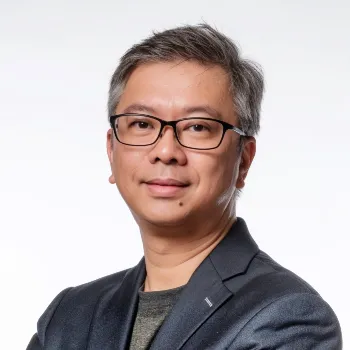
Chang Sau Sheong
Deputy Chief Executive & Chief Technology Officer
GovTech Singapore
Session: From Coding Assistants to Agentic Organisations
Abstract
AI is moving beyond helping developers write code. Agents can now use tools, test their work and complete larger parts of the software delivery process. This talk examines the engineering foundations that make that shift possible, from agent harnesses and feedback loops to workflow graphs, evidence and human control. It then explores how these systems could reshape software teams, roles and organisations, and what leaders should consider before scaling them.
Biography
Sau Sheong is the Deputy Chief Executive and Chief Technology Officer at GovTech Singapore. With 31 years of industry experience, he has held leadership roles at Temasek, SP Group, PayPal, Yahoo and HP, building and leading product engineering teams globally. He is an active contributor to technology communities in Singapore and Southeast Asia and has authored five programming books.
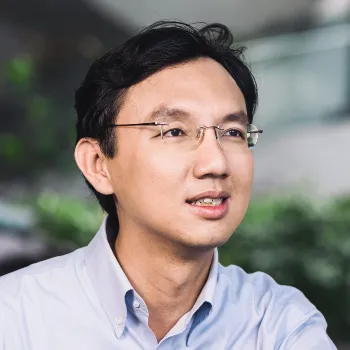
Associate Professor Ben Leong Wing Lup
National University of Singapore (NUS)
Session: Not Broken, but At Risk: Computing Education in an AI-Driven Future
Abstract
Our recent graduates learned to program before generative AI tools were available. Ask them how they work today and they will tell you that they use AI daily and that they are coping very well. Whatever we were doing before evidently worked. In this light, shouldn't we simply train our current students the same way? We would, but we no longer can. Our students now learn in an environment we cannot control, and we are beginning to see the harm that AI is doing to their learning. In this talk, we argue that computing education now faces a behavioural problem rather than a technological one. A recent 30-month panel study of 26,811 Chinese secondary students found that AI adoption raised homework scores by 18% while closed-book examination scores fell by 20% within six months. Every visible signal improved while the underlying learning got worse. The study was conducted with high school students, but we are observing a similar trend among our own undergraduates. This is not a matter of student ignorance. In recent survey data, most students believe that AI harms their critical thinking but they still use it for their homework. They know, and they do it anyway. This behaviour resembles smoking and vaping, which suggests that AI literacy campaigns will not be enough. Meanwhile the gap is widening. Stronger students appear to use AI to learn more effectively while weaker students fall behind. Industry is changing at the same time. Vibe coding has reduced the number of engineers needed to ship software, and entry-level hiring has contracted sharply. The implication is uncomfortable. The market is beginning to pay for judgement rather than for code production, which is precisely the capability our students are outsourcing. And because software engineering practice in the industry is still evolving, we cannot pre-empt the specific tools our graduates will need. Our position is that we should continue to focus on teaching fundamentals and problem solving, while mitigating the potential harms of cognitive offloading. The latter is an open problem rather than a solved one, and we argue that it is urgent for the teaching community to work towards a solution together.
Biography
Ben Leong is an Associate Professor of Computer Science at the National University of Singapore, where he has taught undergraduates for more than twenty years. He received his S.B., M.Eng. and Ph.D. degrees from the Massachusetts Institute of Technology. He received a number of teaching awards, including the NUS Outstanding Educator Award in 2015, and chaired the Computer Science Department's Standing Teaching Committee from 2017 to 2020. He has held a series of roles bridging computing, education and national policy: Director of the Experimental Systems and Technology Laboratory at the Ministry of Education (2014–2019), Director of the Centre for Computing for Social Good and Philanthropy at NUS (2021–2023), and Chief Data Officer (Technical) at AI Singapore, the national AI programme (2020–2025). Since 2020 he has directed the AI Centre for Educational Technologies, where his team applies AI to build software platforms for education.

Nanyang Assistant Professor Conrad Watt
Nanyang Technological University (NTU)
Session: Experiences in introducing AI-assisted coding to students
Abstract
Starting from last year, we have included exercises on Agent-assisted coding to NTU's introductory Software Engineering course. We'll share the successes and challenges we encountered as students worked through these exercises for the first time, and discuss how we plan to develop the course further as industrial practices around AI use continue to evolve.
Biography
Conrad Watt is a Nanyang Assistant Professor at NTU, Singapore. His work focusses on programming language design and software certification. He chairs the W3C WebAssembly Community Group, the international standards body of the WebAssembly programming language and virtual machine. He was previously a Research Fellow at Peterhouse, University of Cambridge.
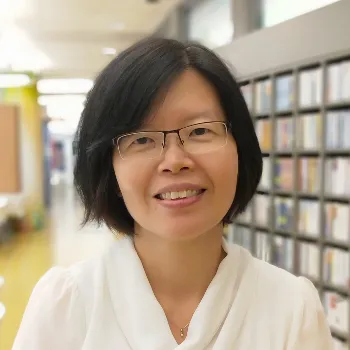
Associate Professor Lo Siaw Ling
Singapore Management University (SMU)
Session: Generative Agents for Pre-Assessment Question Evaluation
Abstract
Ensuring the quality of multiple-choice questions remains a challenge in higher education, as traditional post-hoc psychometric analyses often identify flaws only after students have been negatively impacted. This talk proposes the use of generative agents to simulate student performance to validate items before delivery. In addition, a teacher role-playing prompt is introduced to mitigate high-accuracy bias by prompting the model to anticipate student errors from an educator's perspective. Empirical findings provide evidence of this approach for pre-assessment evaluation.
Biography
Siaw Ling is an Associate Professor of Information Systems (Education) at the School of Computing and Information Systems, Singapore Management University (SMU). She is one of the SMU's Education Research (ER) Fellows and her primary research interests focus on the application of generative AI and large language models in educational contexts, including agent-based assessment evaluation, the use of AI for instructional and pedagogical approach, and personalized learning. She has received multiple grants from institutions such as ST Engineering and the Singapore Ministry of Education.
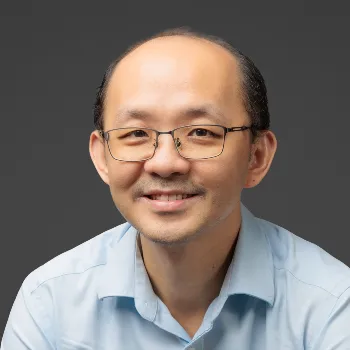
Oka Kurniawan
Principal Lecturer
Singapore University of Technology and Design (SUTD)
Session: Embedding Design AI into Software Studio Course
Abstract
In this talk, we share a new software studio course that embeds SUTD's Design AI philosophy. Students learn Behaviour Driven Development and Spec-Driven Development with Agentic AI workflow as its backbone to solve real-world problems as part of their Design Innovation and Venture Exploration experience. We will share the design of the course and the learning points in embedding Design AI into a software studio course.
Biography
Oka is Principal Lecturer in Information Systems Technology and Design Pillar and Director (Education) at SUTD's Office of AI and Digital Innovation. He has built a strong academic career in computing education and curriculum innovation. At SUTD, he led the largest introductory programming course and helped design and lead several pioneering modules, including Data Driven World, Service Design Studio, Software Abstraction using Functional Programming, and modern Software Design Studio with Agentic AI. He received the SUTD Award for Outstanding Educator in 2018 in the individual category, and again in 2026 together with his teaching team for the Data Driven World course which is under his care.

Associate Professor Oran Zane Devilly
Singapore Institute of Technology (SIT)
Session: Rethinking Collaborative Learning in the Age of AI
Abstract
Generative AI is moving beyond the role of a tool that students consult for information or assistance. This sharing explores the emerging role of AI as an active member of the learning team, participating in the co-construction of knowledge, ideas and artefacts alongside students as peer not a superior. Drawing on the development of TeamAId, an AI-infused collaborative learning environment currently being trialled within computing programmes, this sharing explores how AI can work alongside students to ideate, build and manage projects while supporting communication, coordination and reflection. At the same time, the platform captures and analyses the collaborative process, providing students with insight into their own progress and instructors with an at-a-glance view of how teams are working, enabling more targeted support and providing evidence that can inform peer evaluation. The sharing will consider the opportunities and challenges of designing AI to work effectively and naturally as part of a team, rather than simply as a tool for direct answers.
Biography
Oran Devilly is an Associate Professor at the Singapore Institute of Technology (SIT) and a Deputy Director with SITs Learning and Teaching Academy (STLA), where he teaches and researches in computing, game design and educational technology. His research focuses on gamification and game-based learning, AI for education and the use of emerging technologies to enhance teaching and learning. He leads research exploring AI-supported collaboration and was the principal investigator and oversaw development for TeamAId, an AI-infused collaborative learning environment designed to support Student/AI collaboration and teamwork across disciplines.
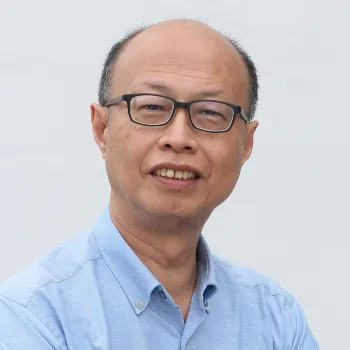
Associate Professor Goh Wooi Boon
Associate Dean for Undergraduate Teaching and Employability
College of Computing and Data Science (CCDS), NTU
Session: Moderator – Innovating Pedagogies for Today’s Computing Education
Biography
A/P Goh Wooi Boon is the Associate Dean for Undergraduate Teaching and Employability at the College of Computing and Data Science, NTU. He teaches undergraduate, graduate and CET level courses in subjects such as Data Visualisation, AI and Society, AI UX Design, AI Ethics and Governance, Ethical Generative AI, etc. He is a Fellow of the Teaching Excellence Academy at NTU and serves as a subject matter expert in NTU’s Committee for the Governance of AI for Learning Analytics (GAILA).