Abstract
The Illiberal Peace Turn? Trends and Contestation in Asia
In this seminar, Dr Subedi examines the contested discourses surrounding peace and peacebuilding in Asia, with particular attention to the emerging ‘illiberal peace turn’ and its broader global implications. Drawing on experiences from South and Southeast Asia, Dr Subedi explores how peacebuilding practices are being reimagined in response to two converging dynamics.
First, the region continues to grapple with persistent ethnic, identity, and liberation conflicts that challenge state authority and legitimacy from below. Second, liberal peacebuilding frameworks, once dominant in shaping conflict transformation, have come under increasing critique for their lack of cultural and contextual sensitivity amid a wider global retreat of liberal norms. Attempts to reconcile liberal peace with local realities through “hybrid peace” have often entrenched authoritarian power and state dominance, sometimes even exacerbating conflicts.
Against this backdrop, Dr Subedi shows how a new form of peacebuilding is emerging across the Asia-Pacific, shaped by concerns with stability, legitimacy, development, and regime security. Yet illiberal peacebuilding faces resistance from below and competitive pressures from above. Dr Subedi argues, while it represents a significant departure from liberal ideas of peace, it remains far from offering a coherent alternative to liberal–hybrid peacebuilding.
Speaker
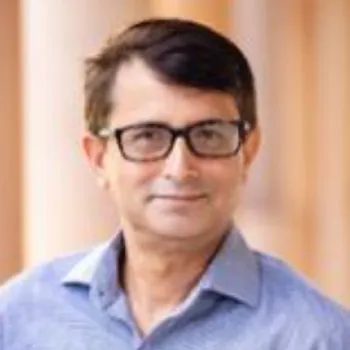
DB Subedi is a Senior Lecturer at the School of Political Science and International Studies at the University of Queensland. His research interests are in peace and conflict studies, religion and politics, and populism and nationalism in the Asia Pacific region.
-
Dr. DB Subedi
DB Subedi's research interest includes conflict transformation and peacebuilding, the intersection of religion and politics, and populism and nationalism in the Asia Pacific region. Currently, his research is focused on exploring the dilemmas and complexities associated with peacebuilding in authoritarian, populist and nationalist states across South and Southeast Asia. He has conducted research fieldwork across South and Southeast Asia, especially Nepal, Sri Lanka, India, and Myanmar.
He is the author of Combatants to Civilians: Rehabilitation and Reintegration of Maoist Fighters in Nepal's Peace Process (Palgrave, 2018) and co-editor of The Routledge Handbook of Populism in the Asia Pacific (Routledge, 2024) and Reconciliation in Conflict-Affected Communities: Practices and Insights from the Asia Pacific. He has also published his research in scholarly journals such as World Development, Contemporary South Asia, Religion & Politics, Asian Studies Review, Journal of Human Rights, Conflict, Security & Development and Contemporary Politics. He is a Research Member in the 'Addressing Violent Extremism and Radicalisation into Terrorism' (AVERT) Research Network at the Deakin University in Melbourne.
Before coming to the academia, he worked with several international organisations for more than ten years in Nepal, Sri Lanka and Viet Nam. Since 2010, he has been actively collaborating with government and non-government organizations and has provided research and consultancy service to several agencies including United Nations Development Programme (UNDP), UN Women, ActionAid Myanmar, UNICEF, International Alert UK, Care International and Mercy Corps. In 2022, he supported the Connected Communities team in NSW Department of Premier and Cabinet to develop and implement the evaluation framework and plan for NSW's Countering Violent Extremism Programme.
Read more