
This session showcases emerging diagnostic technologies from Nanyang Technological University that are advancing early disease detection and precision care. Featuring innovations in liquid biopsy, laser-based sensors and nanochip-enabled digital pathology, alongside industry insights from Roche, the programme highlights translational opportunities and concludes with networking.
Details
Start:
23 January 2026
10:00 am
End: 23 January 2026
2:00 pm
Nanyang Technological University - NTUitive Pte Ltd
NTU Innovation Centre, Level 3 Theatre
Nanyang Drive 71 03638075 Singapore
Singapore
Program
Imagine Innovation
23 January 2026 at 9:30 am
— 23 January 2026 at 10:00 am
Registration
23 January 2026 at 10:00 am
— 23 January 2026 at 10:05 am
Welcome Greetings
23 January 2026 at 10:05 am
— 23 January 2026 at 10:25 am
Exosome-Derived Liquid Biopsy Biomarkers Enable Non-invasive Staging and Early Detection of Liver Disease
Exosomes are cell-secreted microvesicles that carry stable molecular cargo and represent a rich source of minimally invasive biomarkers. Current approaches for liver disease detection and staging rely largely on liver biopsy or advanced imaging, which are costly, invasive, and unsuitable for population-level screening. As a result, liver disease is frequently diagnosed at advanced stages, when therapeutic options are limited. Here, we establish a robust workflow for isolating exosomes from human and mouse blood and profiling their RNA content. Cross-species integration of these exosomal RNA datasets identified a biomarker signature capable of accurately staging fatty liver disease. Building on these findings, we are expanding this platform to detect liver cancer at its earliest stages, with the goal of enabling timely, potentially curative interventions.

23 January 2026 at 10:25 am
— 23 January 2026 at 10:45 am
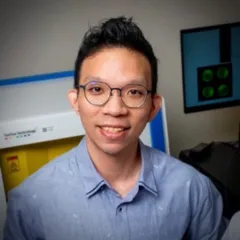
Transforming Tiny Lasers into Next-Gen Sensors for Diagnostics
Lasers have played a pivotal role in modern technologies since its invention owing to their strong light-matter interactions. Recent advances in microscale lasers have further integrated lasers with biological systems. This talk will cover the recent development of microscale lasers and focus on the recent development of microlasers in human-inspired technology to tackle healthcare problems. In specific, we will showcase various generations of laser emitting sensors for multiscale sensing and imaging, disease diagnostics, drug screening, as well as flexible biochips for health monitoring. Finally, discussion and outlook will be made on the strategies to pioneer novel on-chip laser devices for future medical diagnosis and intelligent technology.
23 January 2026 at 10:45 am
— 23 January 2026 at 11:05 am
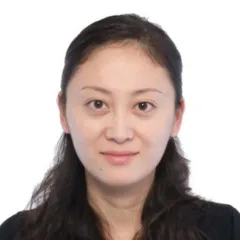
Nanochip–Empowered Digital Pathology for High-Precision Cancer Cell Grading
We present a next-generation digital pathology platform based on nanochip–guided nuclear morphology profiling for rapid and quantitative cancer cell grading. By precisely characterising nanoscale nuclear alterations, our chip translates subtle nuclear mechanical and morphological signatures into high-contrast, quantifiable deformation patterns. These patterns serve as robust and highly sensitive biomarkers that distinguish cancer aggressiveness at the single-cell level. Combined with AI-ready image analytics, this technology enables fast, scalable, and objective cancer grading beyond conventional histopathology. The platform is compatible with standard clinical samples processing and holds strong potential for translational deployment in oncology diagnostics, drug screening, and precision medicine.
23 January 2026 at 11:05 am
— 23 January 2026 at 11:25 am
Reinventing Diagnostics from the Ground Up
Nearly half of the world's population has little or no access to disease diagnostics leading to preventable outcomes including delayed treatment, misdiagnosis, and avoidable deaths. While there has been significant innovation in the areas of RNA/DNA based molecular diagnostics, protein-based diagnostics which is essential for detecting proteins, hormones, and other biomarkers and is critical for clinical diagnostics remains under-innovated and antibody-dependent. Antibodies have significant limitations both in relation to cost, development, stability and integration into detection platforms. Current efforts to overcome these limitations focus on downstream challenges including detection technologies, assay formats and sample handling and preparation. Our efforts instead focus on addressing the upstream challenges by replacing antibodies with our proprietary affinex® binders that are bioengineered for superior diagnostic performance. The affinex® binder technology creates a scalable high-performance point-of-care testing platform that can change the cost and accessible of diagnostics globally.

23 January 2026 at 11:25 am
— 23 January 2026 at 11:45 am
Navigating APAC - Insights for Successful Open Innovation Partnership
In an era of unprecedented healthcare challenges—from aging populations to the rise of chronic diseases, Open Innovation and Partnering has emerged as the essential catalyst for transforming healthcare for Roche Diagnostics APAC. The presentation will explore why the Asia-Pacific (APAC) region is the emerging frontier for these collaborative efforts, and insights gained from open innovation and partnering efforts in the region.

23 January 2026 at 11:45 am
— 23 January 2026 at 2:00 pm
Networking Lunch
Speakers
Associate Professor Torsten Wuestefeld
Molecular Metabolism, Lee Kong Chian School of Medicine
Nanyang Technological University
Associate Professor Chen Yu-Cheng
Director, Centre for Biodevices and Bioinformatics and Principal Investigator, Bio-Intelligent Photonics Laboratory, School of Electrical & Electronic Engineering
Nanyang Technological University
Assistant Professor Zhao Wenting
School of Chemistry, Chemical Engineering and Biotechnology
Nanyang Technological University
Professor Peter Preiser
School of Biological Sciences
Nanyang Technological University