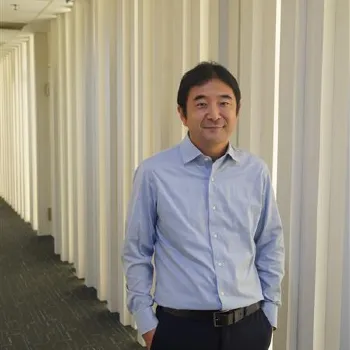
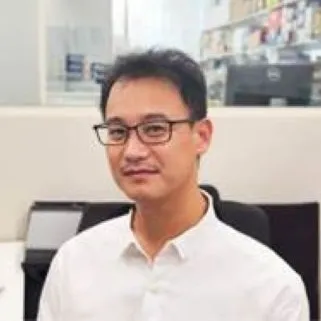
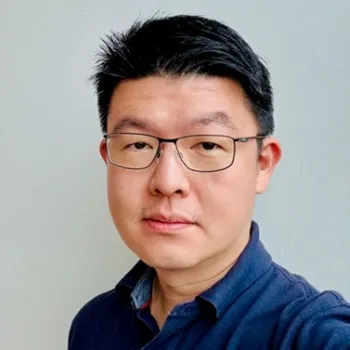
Professor Shunsuke Chiba has been serving as Acting Dean of the College of Science since 1 January 2026. He has chaired the School of Chemistry, Chemical Engineering & Biotechnology (CCEB) since 2023, playing a key role in establishing the interdisciplinary framework of the school. A synthetic organic chemist, Professor Chiba’s research focuses on the development of novel and practical synthetic reactions and catalytic methods to facilitate the efficient synthesis of complex organic molecules with pharmaceutical applications. He earned his PhD in Chemistry from the University of Tokyo in 2006.
Professor Chiba began his independent academic career in 2007 as an Assistant Professor at Nanyang Technological University (NTU), Singapore, in the Division of Chemistry and Biological Chemistry, School of Physical and Mathematical Sciences. He progressed through the ranks to Associate Professor and Professor. His leadership experience includes serving as Head of the Division of Chemistry and Biological Chemistry (2012–2016; 2021–2022), Acting Co-Chair of CCEB at its inception in April 2022, Acting Chair of CCEB from April 2023, and Chair of CCEB from October 2023.
Professor Chiba has been recognized with several prestigious awards, including the Mukaiyama Award, Mitsui Chemicals Catalysis Science Award, GSK-SINC Award in Organic Chemistry, and the Chemical Society of Japan Award for Young Chemists. He is a Fellow of the Royal Society of Chemistry and the Singapore National Institute of Chemistry.
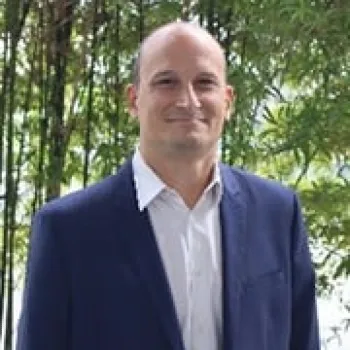
Mathieu Salanne is professor of chemistry at Sorbonne University (France) and visiting professor at CNRS@CREATE (Singapore). His research field is the simulation of electrolytes for energy production and storage, with a focus on electrochemical interfaces. He obtained his PhD in 2006 and was appointed assistant professor at Sorbonne University in 2007 and promoted to full professor in 2016. He was group leader (ionic liquids and electrochemistry) at the PHENIX laboratory from 2014 to 2021, and was appointed as director of the Institute for computing and data science from 2022 to 2024. He also held am excellence chair in high-performance computing at Paris-Saclay University from 2014 to 2018. His research has been recognized by the IUPAP young scientist prize in computational physics in 2014, and he obtained an ERC consolidator grant in 2017 (AMPERE project). In 2020 he was appointed as a junior member of Institut Universitaire de France. Mathieu is a member of the executive committee of the Sorbonne Cluster for Artificial Intelligence (SCAI).
School of Chemistry, Chemical Engineering and Biotechnology, Nanyang Technological University Singapore
Sierin Lim
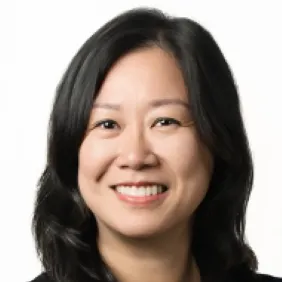
Sierin Lim is an Associate Professor of Bioengineering at the School of Chemistry, Chemical Engineering and Biotechnology at Nanyang Technological University, Singapore (NTU). Her research group focuses on the design and engineering of hybrid nano/microscale biosystems for applications in health and the environment. The projects range from repurposing protein cages as delivery systems to engineering enzymes and microbes to up-cycle plastic wastes to oil, cellulose, and cannabinoids using cyanobacteria, cellulose bacteria, and yeast.
She is the NTU Chair of the Sorbonne-NTU Joint PhD Cotutelle programme. She served as the founding Associate Dean of Global Partnerships at the NTU Graduate College from 2019 to 2025. She earned her B.S. in Chemical Engineering and Ph.D. in Biomedical Engineering from University of California Los Angeles (UCLA).
Institute of Intelligent Systems and Robotics, Sorbonne University
Nicolas Baskiotis
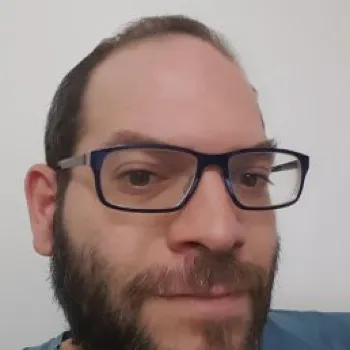
Nicolas Baskiotis is an Associate Professor at the Institute of Intelligent Systems and Robotics (ISIR, UMR 7222), Sorbonne University. His research lies at the intersection of artificial intelligence and machine learning, with a focus on time series analysis, extreme multi-class classification, representation learning, and robust, interpretable models. He has contributed to methods such as LEADS for dynamical systems and hyperbolic approaches for graph representation. At Sorbonne University, he is also deeply engaged in teaching and supervision, delivering courses in computer science, machine learning, and AI, and mentoring MSc and PhD students.
Sorbonne Cluster for Artificial Intelligence, Sorbonne University
Raphael Cousin
Raphael Cousin is a Data Scientist at SCAI (Sorbonne Cluster for Artificial Intelligence), participating in multiple research projects including RAG systems, generative models for trajectory generation, and deep models for weather forecasting. He teaches data science courses at Sorbonne University. With expertise in data engineering, he brings extensive experience in deploying and managing large-scale production projects throughout the entire data pipeline.
College of Computing and Data Science, Nanyang Technological University Singapore
Melanie Herschel
Melanie Herschel is an Associate Professor at Nanyang Technological University, Singapore. Her research focuses on data integration, curation, provenance, and quality. With a strong background in both academic research and applied data systems tailored to various domains, she has led numerous projects at the intersection of scalable data engineering and trustworthy data management. Her work has been published in leading data management conferences and journals in databases, and she actively contributes to shaping the future of data management through editorial and program committee roles.
Rocio Semino is an Associate Professor in physical chemistry and computational modelling at Sorbonne University, Paris, France. Her research contributes to understanding the structural and dynamical aspects that underlie a large variety of processes involving condensed matter systems, such as the self-assembly and amorphization of porous materials, proton conduction, structure and compatibility or polymer composites and challenging gas separations via porous materials-based membranes. She has held an ERC Starting Grant since 2022 to develop a multiscale modelling methodology to study the self-assembly of metal-organic frameworks. Rocio obtained her PhD at the University of Buenos Aires, Argentina in 2014 and after two postdoctoral positions at the University of Montpellier, France and at the EPFL in Switzerland, she was recruited as an assistant professor in 2018 in France.
Lee Kong Chian School of Medicine & School of Chemistry, Chemical Engineering and Biotechnology, Nanyang Technological University Singapore
Xiaotao Shen
Dr. Xiaotao Shen serves as an Assistant Professor at the Lee Kong Chian School of Medicine, Nanyang Technological University in Singapore. He completed his PhD in metabolomics and bioinformatics at the Chinese Academy of Sciences (CAS) in Shanghai, China, in December 2018. Following his PhD, he undertook postdoctoral training at Stanford University under the guidance of Prof. Michael Snyder starting in April 2019. His postdoctoral research primarily centers on the integration of multi-omics data and its applications in precision medicine. Dr. Shen has a broad interest in the development of bioinformatics algorithms for multi-omics data, aimed at advancing precision medicine. His specific research interests include developing bioinformatics algorithms for comprehensive analysis workflows and deep learning for LC-MS data, metabolic network analysis, and the integration of wearable and multi-omics data, as well as microbiome and metabolome data integration.
Furthermore, Dr. Shen utilizes these bioinformatics algorithms in a systems biology approach to explore potential biomarkers and mechanisms related to pregnancy and associated diseases, as well as aging and its related diseases.
Lee Kong Chian School of Medicine, Nanyang Technological University Singapore
Si Yong Yeo
Dr. Si Yong Yeo is an Assistant Professor at Lee Kong Chian School of Medicine, Nanyang Technological University, Singapore. He obtained his Ph.D in Computational Engineering in 2011. He did his postdoctoral research at Max Planck Institute for Intelligent Systems. He was a Scientist at the Institute of High Performance Computing, A*STAR. His current research focuses on the design and use of AI systems for medicine, which includes AI for medical imaging data, computer vision, health informatics and medical data interpretation.
School of Physical & Mathematical Sciences, Nanyang Technological University Singapore
Ee Hou Yong
Dr. Ee Hou Yong is an Assistant Professor of Physics & Applied Physics at Nanyang Technological University. He received dual BSc degrees in Mathematics and Physics and an MSc in Statistics from Stanford University, followed by a PhD in Physics from Harvard University. He has worked on problems ranging from the geometry of DNA and RNA to the morphology of avian eggs, fluctuating ribbons, and the collective dynamics of active matter such as cells, ants, and bees. More recently, his group applies emerging geometric and topological approaches, coupled with machine learning, to analyze large-scale biological and physical data. His work has appeared in journals including Science, PNAS, and Physical Review Letters, and is supported by competitive national research grants.