By Acting Dean Shunsuke Chiba, College of Science, Nanyang Technological University, Singapore
By Professor Mathieu Salanne, Sorbonne University, France
We will provide a comprehensive overview of artificial intelligence evolution, tracing the path from the multilayer perceptrons of the 1960s to today's large language models. This presentation will redefine and clarify fundamental concepts including models, parameters, loss functions, gradient descent, backpropagation, and training methodologies. We'll explore the progression from linear regression training to deep machine learning, demystifying core mechanisms. The journey will cover diverse applications across regression and classification tasks, culminating in natural language processing and generative models, providing attendees with a clear understanding of how modern AI systems actually work.
This presentation will provide a structured overview of widely used Machine Learning algorithms—including k-Nearest Neighbors, Decision Trees, Support Vector Machines, and Neural Networks—with a particular emphasis on the interplay between geometric intuition and probabilistic modeling. We will revisit the canonical learning paradigms (Unsupervised, Supervised, and Reinforcement Learning), supported by use cases from scientific domains. The objective is to foster an intuitive grasp of the operational principles of these algorithms, without delving into mathematical formalism, and to trace the evolution of the field through the lens of representation learning and its central role in modern ML approaches.

Artificial intelligence is rapidly transforming scientific practice, from supporting medical diagnostics to guiding engineering simulations and informing architectural design. Yet, one of the most critical steps for harnessing AI’s potential is often underestimated: preparing the data. This seminar introduces the common principles of data preparation - cleaning, standardization, integration, and documentation - and shows how they apply across diverse fields. Drawing on examples from several domains, we will see how rigorous preparation ensures reproducibility, reliability, and scientific insight. Participants will be invited to reflect on data challenges in their own disciplines and to discover shared data preparation strategies to enable impactful use of AI.
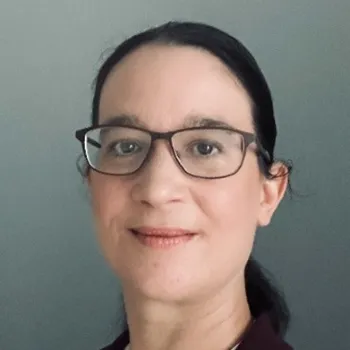
We will provide a comprehensive overview of artificial intelligence evolution, tracing the path from the multilayer perceptrons of the 1960s to today's large language models. This presentation will redefine and clarify fundamental concepts including models, parameters, loss functions, gradient descent, backpropagation, and training methodologies. We'll explore the progression from linear regression training to deep machine learning, demystifying core mechanisms. The journey will cover diverse applications across regression and classification tasks, culminating in natural language processing and generative models, providing attendees with a clear understanding of how modern AI systems actually work.
Starting with the fundamentals of digital images and how machines process visual information, we'll explore the evolution from convolutional neural networks (CNNs) to modern attention-based architectures, examining how convolution layers extract features and attention mechanisms focus on relevant image regions. The session will cover image enhancement techniques and popular framework models, including classification, object detection, and segmentation. We'll conclude with image generation models, providing detailed analysis of multimodal architecture and diffusion-based generation techniques.
AI is transforming medicine by enabling faster, more accurate, and interpretable analysis of complex biomedical data. At LKCMed, we develop AI methods for clinical imaging and healthcare data to improve diagnosis, prognosis, and patient care.
In this session, we will showcase ongoing projects that illustrate how AI integrates into medical workflows, including:
- Segmentation of anatomical structures from CT and X-ray images.
- Shape analysis and feature detection in cardiac imaging.
- Glaucoma detection in ophthalmology.
- Report synthesis for chest X-rays.
The talk will highlight datasets, models, and observations in the projects. We will discuss the clinical problems, the machine learning techniques employed, and the importance of interdisciplinary collaboration between computer scientists and biomedical researchers. The session will give students an overview of the different AI projects conducted in the medical industry, and how AI technology can be adapted to help doctors.
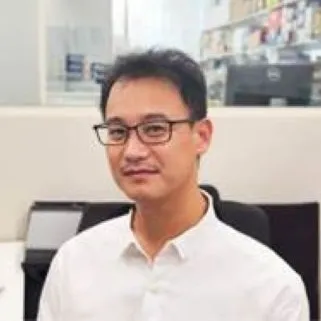
The emergence of artificial intelligence has opened new possibilities for uncovering the geometry and topology of biological systems across scales. In this talk, I will present our recent work on applying machine learning and deep learning to nucleic acid structures, with a focus on G-quadruplexes (G4s)—non-canonical DNA structures with critical roles in gene regulation, replication, and genomic stability. We developed G4ShapePredictor, a machine learning framework that predicts G4 folding topology directly from sequence, and G4STAB, a multi-input deep learning model that estimates G4 thermodynamic stability by incorporating sequence and environmental factors such as salt concentration. Beyond G-quadruplexes, I will also discuss emerging geometric and topological approaches for analyzing biomolecules. Together, these studies illustrate how AI, geometry, and physics can be combined to reveal new principles of biological organization.
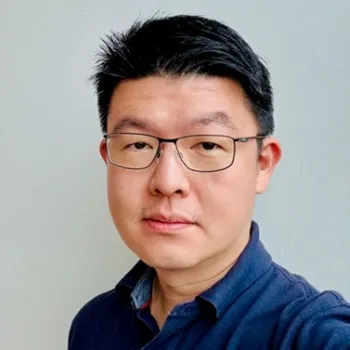
Multi-omics technologies have transformed biomedical research by enabling the simultaneous measurement of genes, transcripts, proteins, metabolites, and more. Yet extracting coherent, biologically meaningful insights from such vast and heterogeneous data remains a major challenge. Artificial intelligence (AI) methods, particularly deep learning and large language models (LLMs), offer powerful opportunities to uncover latent biological structure, annotate unknown features, and generate integrative hypotheses at unprecedented scale.
In this talk, I will introduce AI frameworks such as LLM-based approach and MAPA (Functional Module Identification and Annotation for Pathway Analysis Results Using LLMs) and demonstrate how these frameworks have been developed for omics and biomedical studies. Participants will learn and appreciate how LLMs can move multi-omics beyond fragmented pathway lists to coherent, mechanistic narratives for AI-driven multi-omics and biomedical discovery.
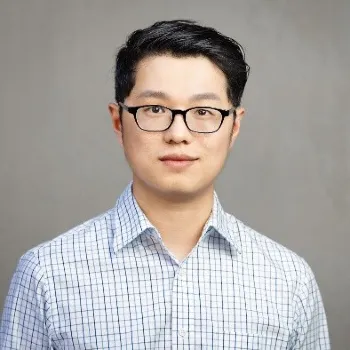
Artificial intelligence is revolutionizing materials chemistry. In this lecture, I will cover a selected set of examples to illustrate how AI can be interfaced with materials chemistry to boost our research. We will cover topics ranging from the discovery of new materials, scanning large materials databases to find the most promising candidates for target applications, unveiling hidden patterns that are invisible to human eyes, improving the science of synthesis of new materials and the basics of self-driven laboratories.
By Associate Professor Sierin Lim, School of Chemistry, Chemical Engineering and Biotechnology at Nanyang Technological University, Singapore